Types of Geodesic Domes (Full, 3/9 Dome, Partial Dome)
Geodesic domes can be engineered in a variety of forms, tailored to meet specific needs, aesthetics, and site constraints. Here’s a clear guide to the main types: the Full Dome, 5/9 Dome, and Partial Dome.
Also Check: How dome hands Wind and Snow Loads
1. Full Geodesic Dome (Complete Sphere)
- Description:
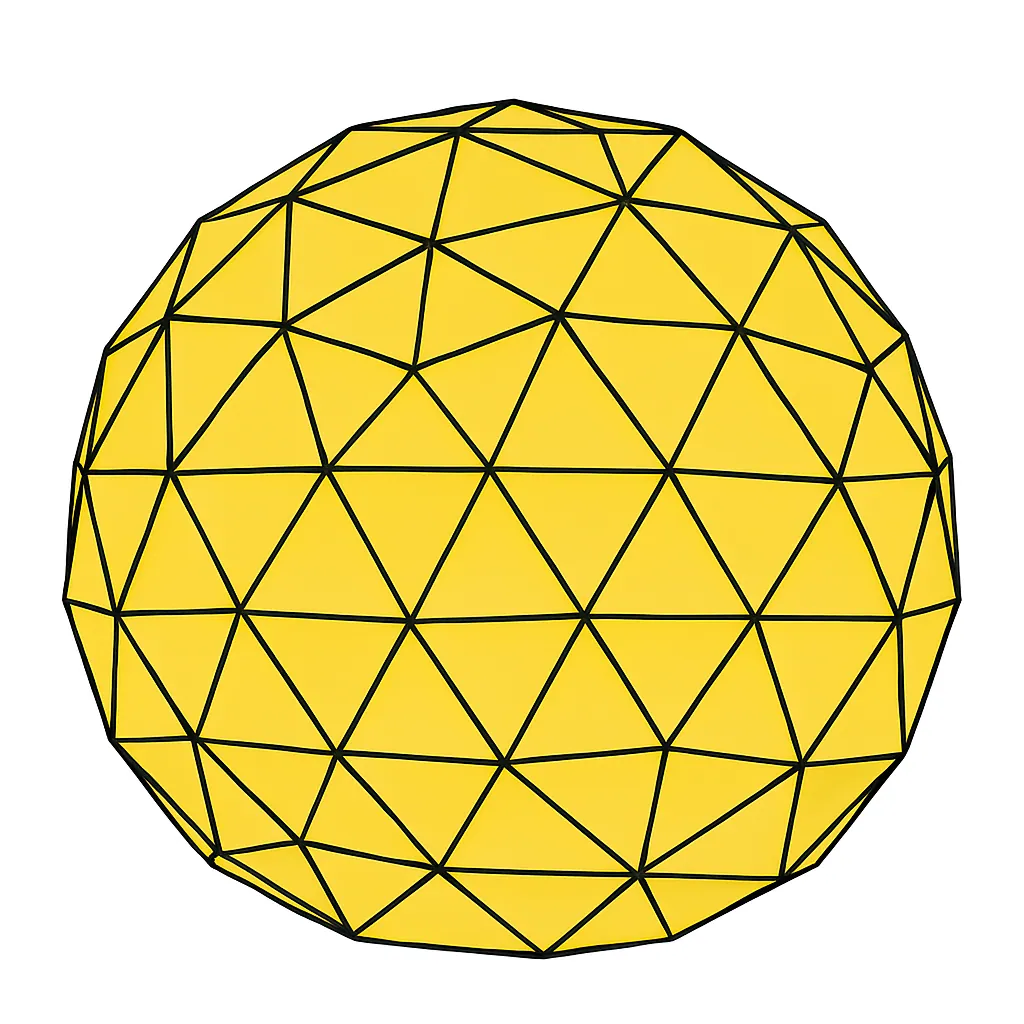
A full geodesic dome represents a complete sphere or a perfectly closed hemispherical structure built from a network of interconnected triangles.
Also Check: What’s the average lifespan of a geodesic dome
- Uses:
Rare in most practical applications due to accessibility and space utilization challenges. Sometimes used for artistic installations, planetariums, or experimental design, where a pure, uninterrupted spherical volume is desired. - Pros:
- Offers theoretical maximum strength and efficiency.
- Encloses the most volume for the least surface area of any structural shape.
- Cons:
- Difficult to enter/exit with no flat base.
- Hard to anchor and use for typical living or hospitality purposes.
Also Check: How to select right Geodesic dome in Glamping
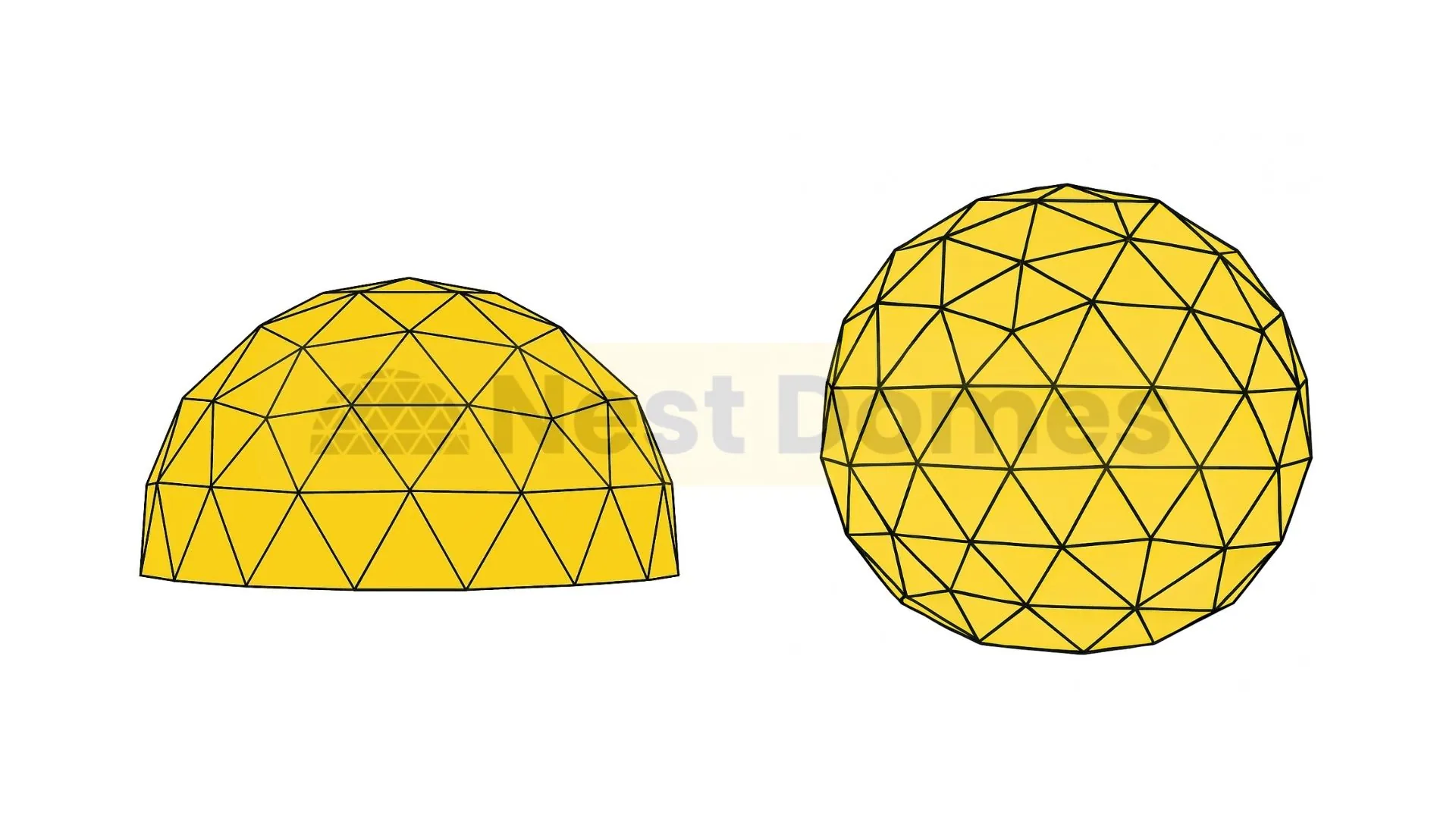
2. 5/9 Geodesic Dome (Most Popular for Glamping & Architecture)
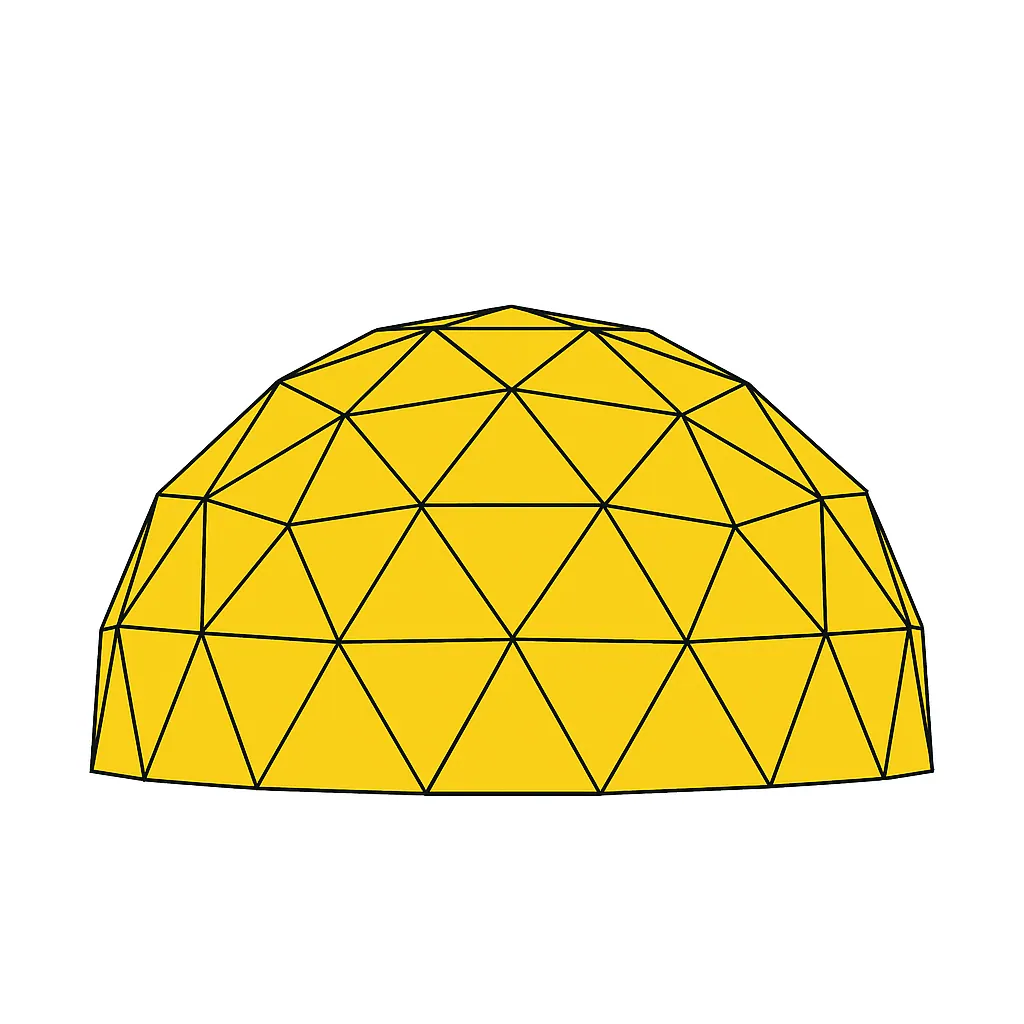
- Description:
The 5/9 dome is constructed by slicing off the bottom portion of a full sphere, leaving a flattened base. It takes slightly more than half (62.5%) of the sphere’s full height. - Uses:
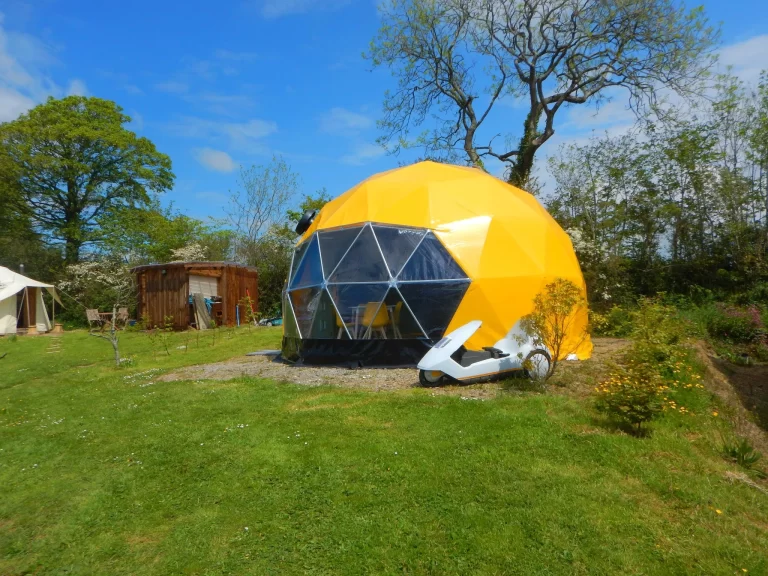
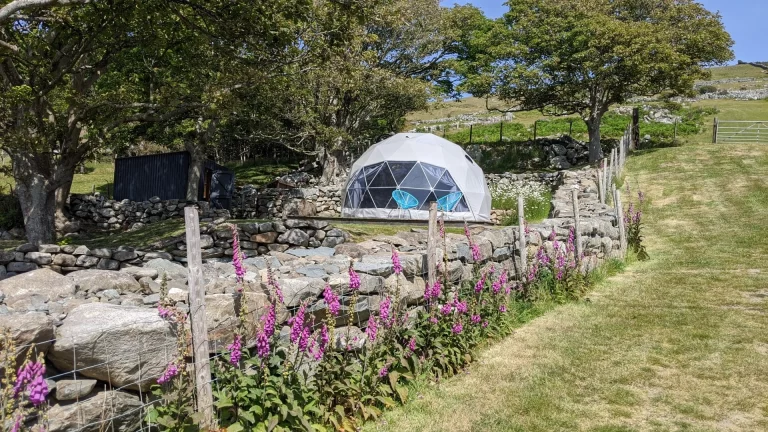
This is by far the most common dome type for glamping resorts, homes, greenhouses, and event venues. The flat base makes it easy to install on platforms or foundations. - Pros:
- Stable, accessible, and allows for vertical walls and standard doors/windows.
- Efficient in terms of material use and interior space.
- Sheds wind, rain, and snow better than traditional shapes.
- Cons:
- Slightly less volume and natural floor-to-floor height at the perimeter compared to a full dome.
- Why Nest Domes Loves the 5/9 Dome:
Most Nest Domes are built to the 5/9 configuration, offering the perfect balance of beauty, usability, and strength for hospitality and residential projects.
Also Check: Why Geodesic Domes Are the Strongest Shape in Architecture
3. Partial Geodesic Domes (Custom Cuts)
- Description:
Partial domes refer to any section of a full sphere less than 5/9 ranging from small domed canopies to larger segments (such as 3/8) for lower-profile or specific site-fit needs. - Uses:
- 3/8 Domes: Often used for event canopies, playgrounds, yoga shelters, or artistic structures. They provide a lower profile, easier integration into landscapes, and unique visual appeal.
- Custom Partial Domes: Can be used for awnings, stage covers, greenhouses, or blending into spaces with height restrictions.
- Pros:
- Highly adaptable to site constraints and creative visions.
- Quicker to install and may use fewer materials.
- Cons:
- Lower interior volume and headroom.
- Need precise engineering for structural stability.
Also Check: History of Geodesic Domes
Choosing the Right Dome Type
- Full Dome: For special projects prioritizing maximum enclosed volume or scientific simulation.
- 5/9 Dome: Ideal for glamping, eco-stays, homes, resorts, and greenhouses combining strength, beauty, and function.
- Partial Dome: Perfect for aesthetic features, shelters, or where unique site requirements exist.
Summary:
The type of geodesic dome you choose from a full sphere to a 5/9 or tailored partial segment will shape the experience, utility, and style of your space.
At Nest Domes, we guide you to the perfect dome type for your vision, site, and usage, ensuring a blend of form, function, and elegance for your project.
Transform Your Space with a Nest Dome
From luxury glamping domes to large event spaces, our geodesic domes redefine modern design. Let’s build something extraordinary together.